In the Media
From Microbial Innovation to Sustainable Materials: Advancing Biofuels, Biomedicine, and Food Preservation
As the world searches for cleaner energy, safer food systems, and more sustainable materials, microbial biotechnology is emerging as a powerful solution. At Taipei Medical University (TMU), researchers are transforming microorganisms and bio-based materials into practical innovations with applications ranging from biofuel production to biomedical products and eco-friendly food packaging.
A research team led by Associate Professor Shin-Ping Lin from the School of Food Safety at TMU has achieved a series of impactful breakthroughs in bacterial cellulose (BC) applications and microbial fermentation optimization. Supported by Taiwan’s National Science and Technology Council (NSTC), the team’s findings have been published in leading international journals, including Bioresource Technology (impact factor 9 in 2024), LWT – Food Science and Technology (impact factor 6.6 in 2024), Food Packaging and Shelf Life (impact factor 10.6 in 2024), and the International Journal of Biological Macromolecules (impact factor 8.5 in 2024). Together, these studies highlight TMU’s growing strength in sustainable bioengineering and translational food science.
Enhancing Biofuel Efficiency through Cold Plasma Detoxification
To address the persistent challenge of fermentation inhibitors generated during lignocellulosic hydrolysis, the team developed an innovative physical detoxification strategy for bioethanol production. By applying atmospheric cold plasma (ACP), key inhibitory compounds—including formic acid, acetic acid, hydroxymethylfurfural (HMF), and furfural—were effectively degraded.
Under optimized conditions of 200 W for 25 minutes, ACP achieved complete removal of furfural and up to 80% degradation of HMF. This significantly enhanced fermentation performance, increasing the bioethanol productivity of Kluyveromyces marxianus from 0.25 to 0.65 g/L/h. Notably, the study also identified chicken meal as a cost-effective alternative nitrogen source, further improving the economic feasibility of bioethanol production.
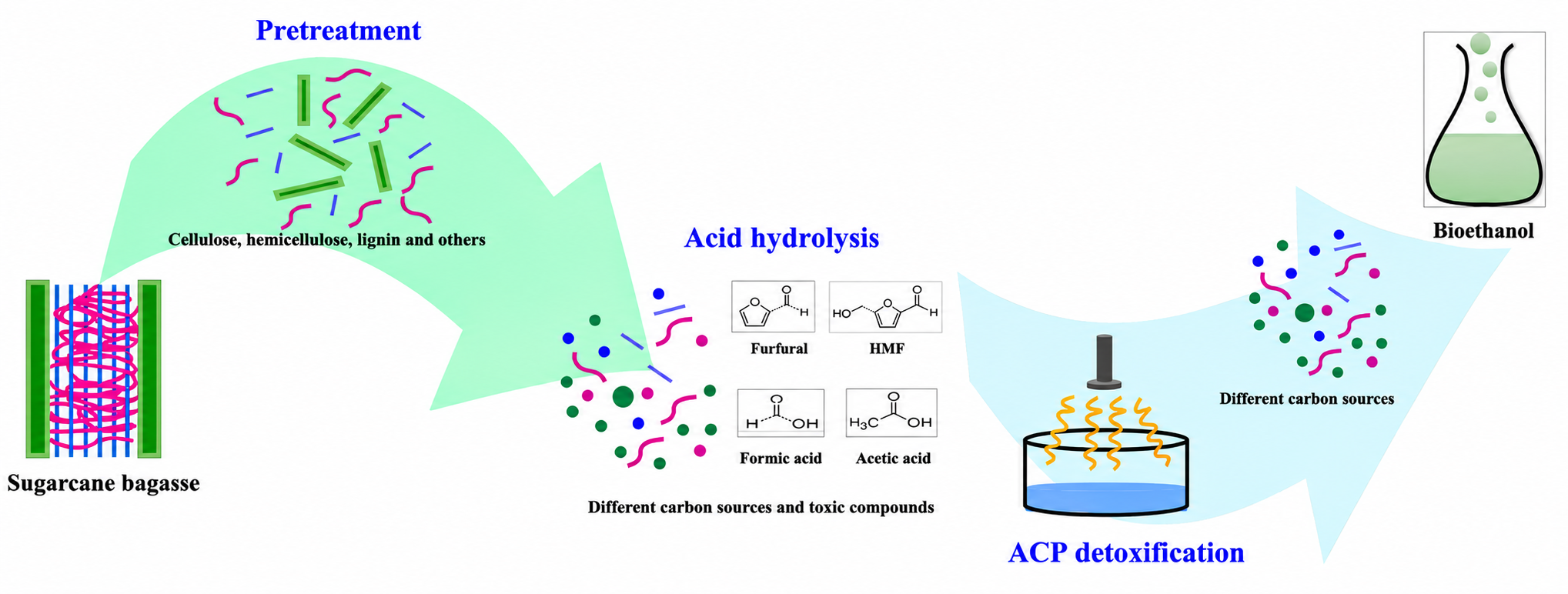
Graphic abstract of ACP detoxification of agriculture waste for bioethanol production
Boosting Functional Biopolymer Production via Immobilized Fermentation
The team also established an advanced mycelium immobilization system to enhance the production of extracellular polysaccharides (EPS), compounds widely recognized for their therapeutic potential.
Through response surface methodology (RSM), EPS production in an alginate-based immobilized system increased by 90.2%. When scaled up in a bubble column bioreactor, yields reached 10.42 g/L, while the immobilized beads remained stable and reusable for at least three cycles.
Importantly, the produced EPS demonstrated strong antioxidant activity and antibacterial effects against Staphylococcus aureus, while exhibiting no signs of harming normal cells—highlighting its promise for biomedical and functional food applications.
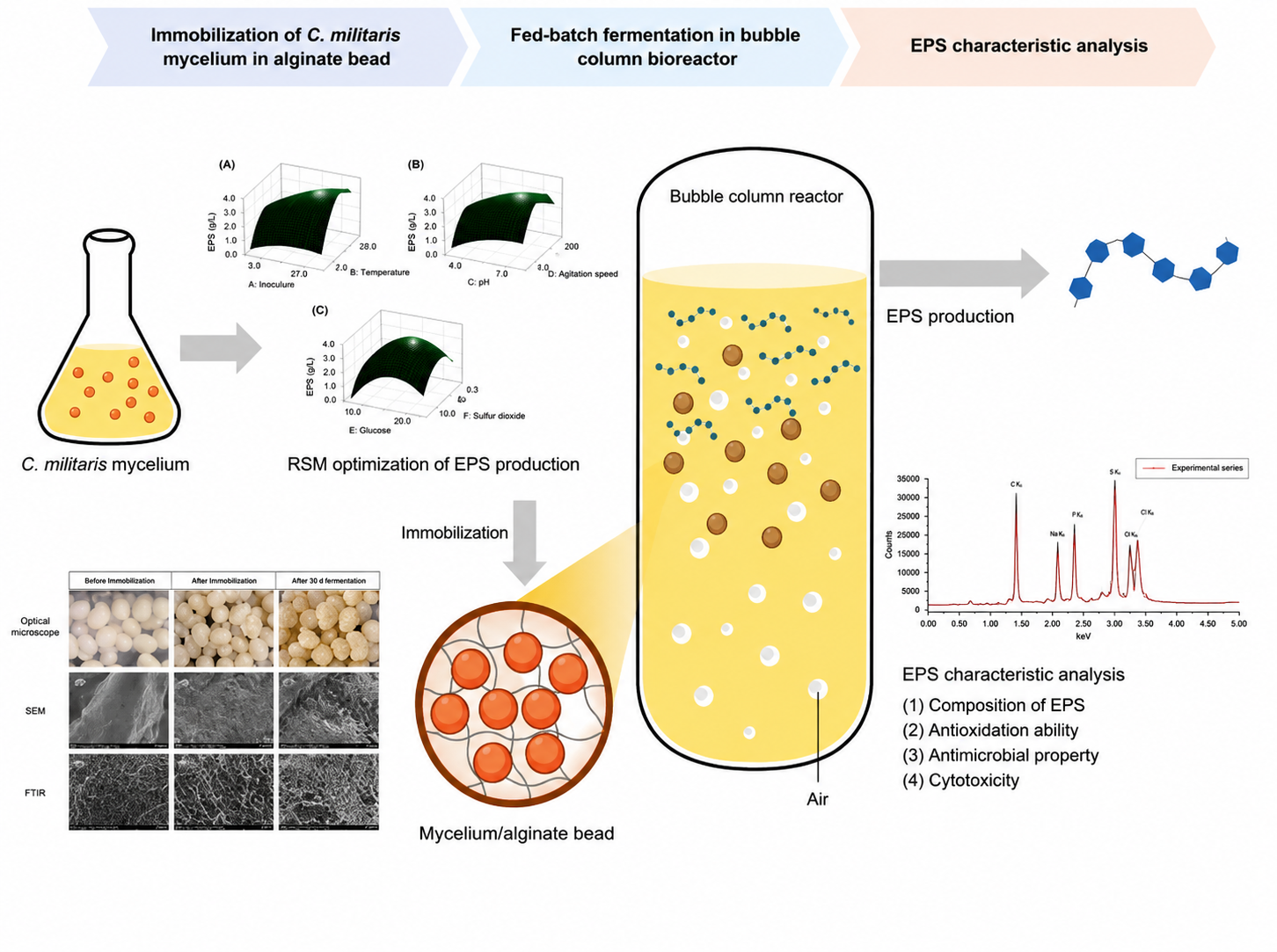
Graphic abstract of optimized fermentation of Cordyceps militaris for extracellular polysaccharide production
Developing Smart and Sustainable Food Packaging Using Porous Bacterial Cellulose
Addressing both food spoilage and environmental concerns, the team engineered a novel active packaging material by modifying the structural properties of bacterial cellulose.
The researchers developed a foaming bacterial cellulose (FBC) film using foam templating combined with agar incorporation, creating a highly porous structure with excellent swelling capacity. The film was further functionalized with carvacrol, a natural antimicrobial compound, enabling controlled release behavior enhanced by the agar matrix.
In sea bass fillet preservation tests, the carvacrol-loaded FBC film significantly inhibited the growth of Shewanella putrefaciens, reduced lipid oxidation by 67.5%, and effectively delayed the accumulation of total volatile basic nitrogen (TVBN). These results demonstrate its strong potential as a sustainable alternative to conventional plastic-based food packaging.
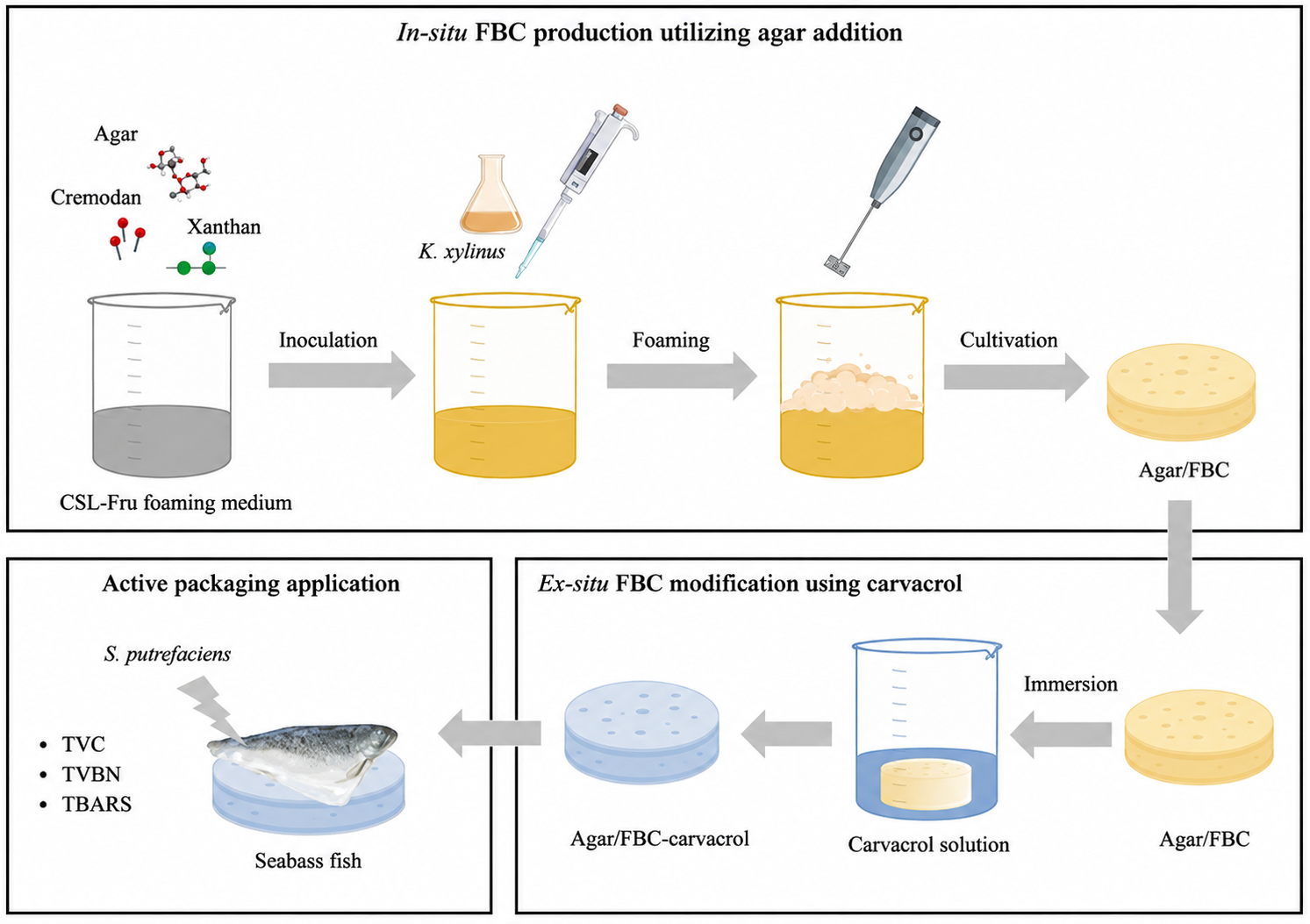
Graphic abstract of agar altered foaming bacterial cellulose for food packaging application
Translating Microbial Technologies into Real-World Solutions
Together, these three studies from an integrated bioengineering pipeline—from fermentation optimization and high-value bioproduct generation to sustainable material applications. By advancing microbial technologies across energy, biomedical, and food preservation, Associate Professor Lin’s team demonstrates TMU’s capacity to translate fundamental research into innovative solutions that support sustainability, public health, and industrial applications.
- Author Profile: Shin-Ping Lin, Associate Professor, School of Food Safety, College of Nutrition